

Phytosanitary import requirements of the Netherlands are directly based on the plant health regime of the European Community and its Member States.
The purpose of these requirements is to prevent the introduction and spread of (quarantine) pests and diseases within the European Union. The EU requirements on plant health can be found on the EU-website.
CHED's
In the Netherlands, a national IT-system (Client import) is used for handling Common Health Entry Documents (CHED's). After an import inspection the information in Client import is sent automatically to TRACES and registered in a CHED. This applies to animals, live products, products of animal origin, composite products, hay and straw, food and feed of non-animal origin, plants and plant products. In order to make a CHED, information must therefore be placed in the national IT system, it is mandatory to use specific software that meets established specifications. It is strongly recommended to contact a Dutch forwarder to submit CHED's and to handle the formalities.
News
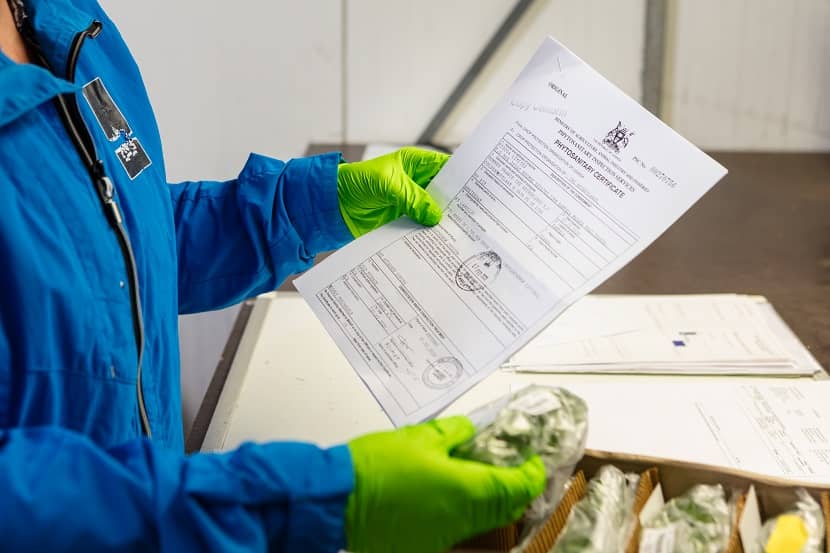
Additional declarations and exemptions for RNQP requirements for plants for planting for import into the EU
As of 6 July 2026, additional declarations detailing compliance with Regulated Non-Quarantine Pests (RNQPs) requirements are ...
Read moreRNQP additional declarations mandatory on phytosanitary certificates for import as of July 2026
As of 6 July 2026, phytosanitary certificates for import must include a complete additional declaration specifying the applicable ...
Read moreImport controls: testing of seeds of beans for detection of latent infection of Curtobacterium flaccumfaciens pv. flaccumfaciens (Cff) starting in 2025
Do you import seeds for sowing of common bean (Phaseolus vulgaris) or runner bean (P. coccineus)? These seeds may be infected ...
Read more